
Now, today we are going to learn about the first conditional.
The
First Conditional
The first
conditional has the present
simple after 'if', then the future
simple in the other clause:
·
if + present simple, ... will + infinitive
It's used
to talk about things which might happen in the future. Of course, we can't know
what will happen in the future, but this describes possible things, which could
easily come true.
·
If it rains, I won't
go to the park.
·
If I study today, I'll go to
the party tonight.
·
If I have enough money, I'll buy some
new shoes.
·
She'll be late if the train is delayed.
·
She'll miss the bus if she doesn't
leave soon.
·
If I see her, I'll
tell her.
First vs. Zero Conditional:
The first
conditional describes a particular situation, whereas
the zero
conditional describes what happens in general.
For example (zero conditional): if you sit in the sun, you get burned (here I'm talking about every time a person sits in the sun - the burning is a natural consequence of the sitting)
But (first conditional): if you sit in the sun, you'll get burned (here I'm talking about what will happen today, another day might be different)
For example (zero conditional): if you sit in the sun, you get burned (here I'm talking about every time a person sits in the sun - the burning is a natural consequence of the sitting)
But (first conditional): if you sit in the sun, you'll get burned (here I'm talking about what will happen today, another day might be different)

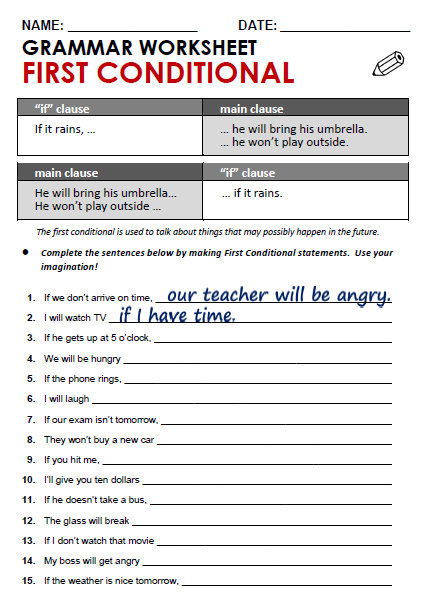
Taken from: https://www.perfect-english-


A lot of information, but its always appreciated. good ways to explain an extensive topic. Good job!
ResponderEliminar